 New topic
 Printable
Russia
Peru
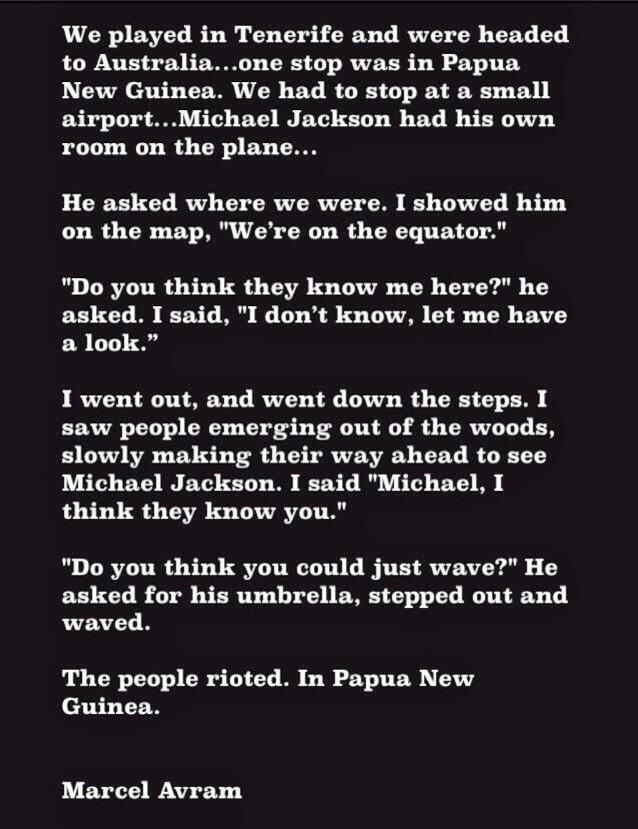
Papua New Guinea
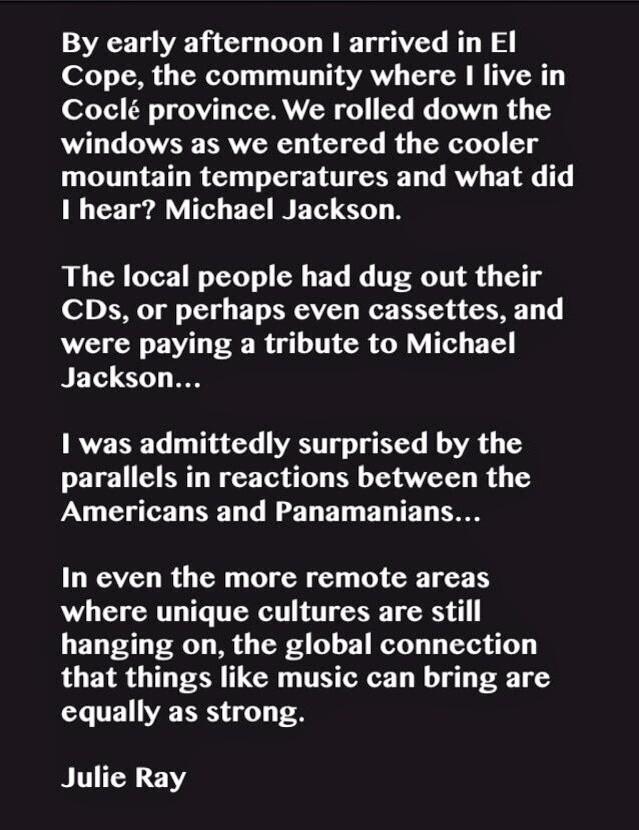
Panama
Oman
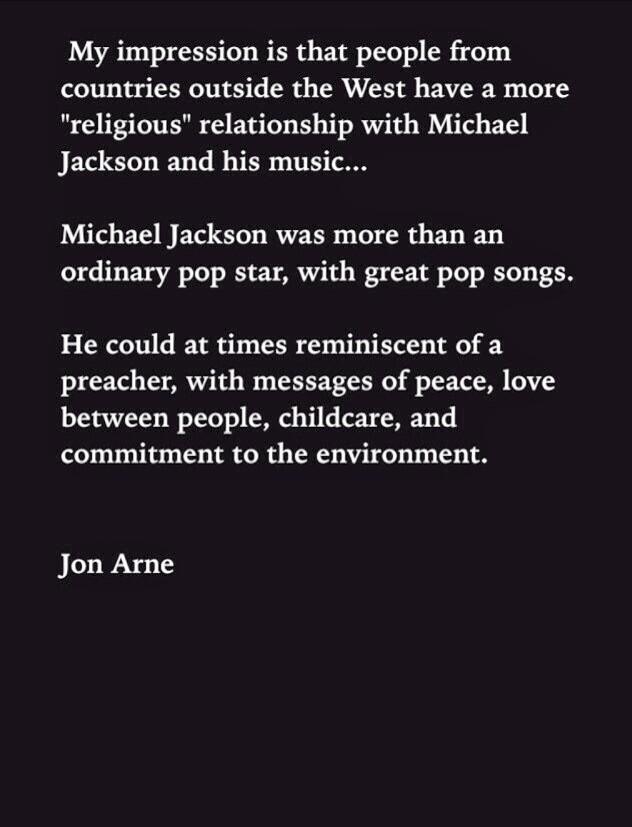
Norway
| |
- E-mail - orgNote -  Report post to moderator Report post to moderator |
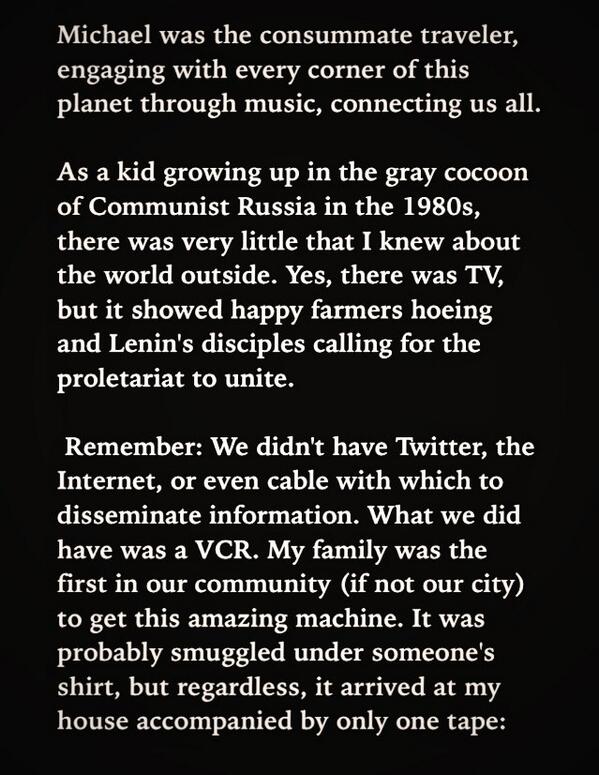
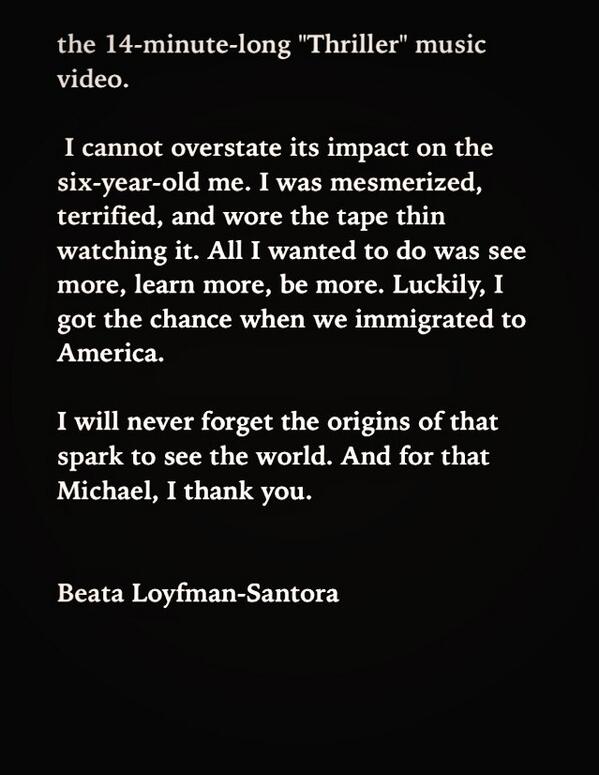
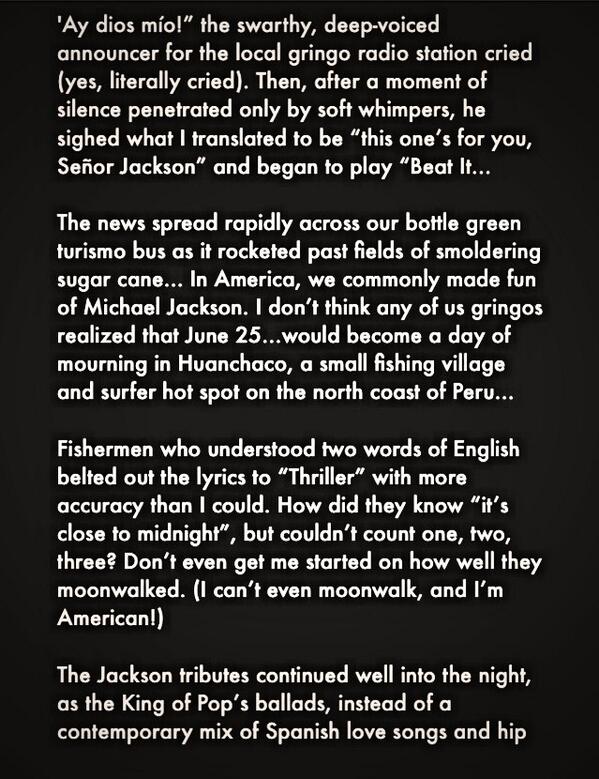
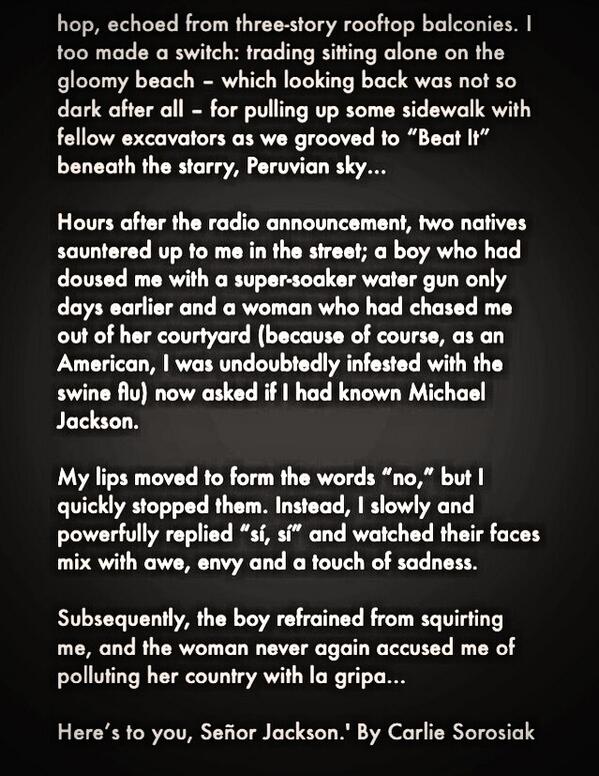

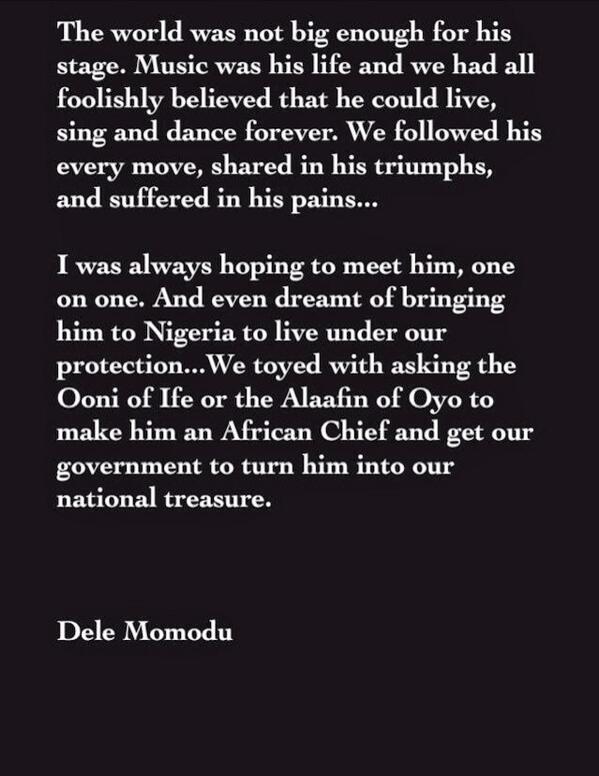
Nigeria.
New Zealand
Morocco
Mongolia
Mauritius
| |
| - E-mail - orgNote - Report post to moderator |

Malaysia
Lithuania
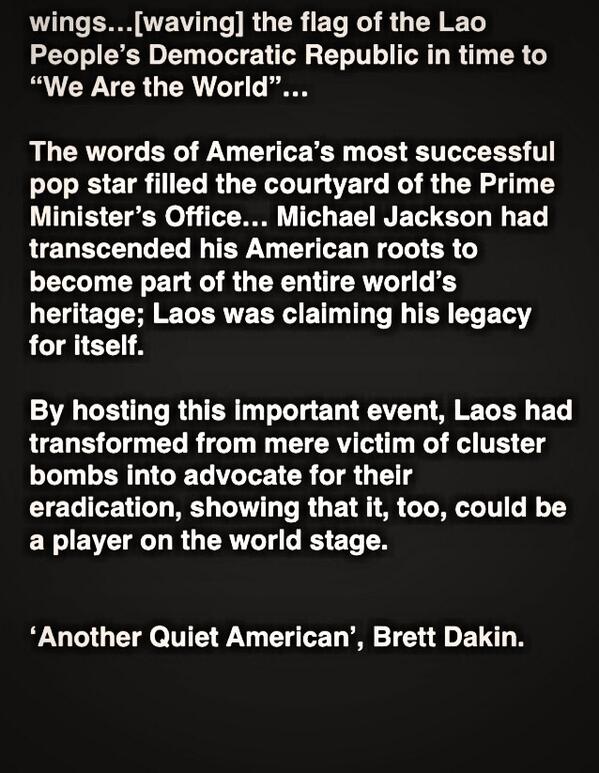
Laos
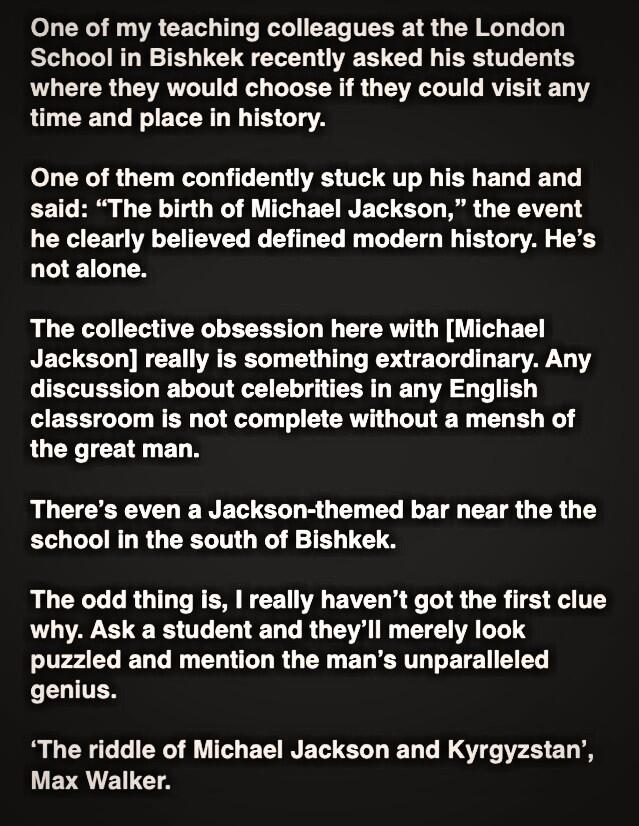
Kyrgyzstan
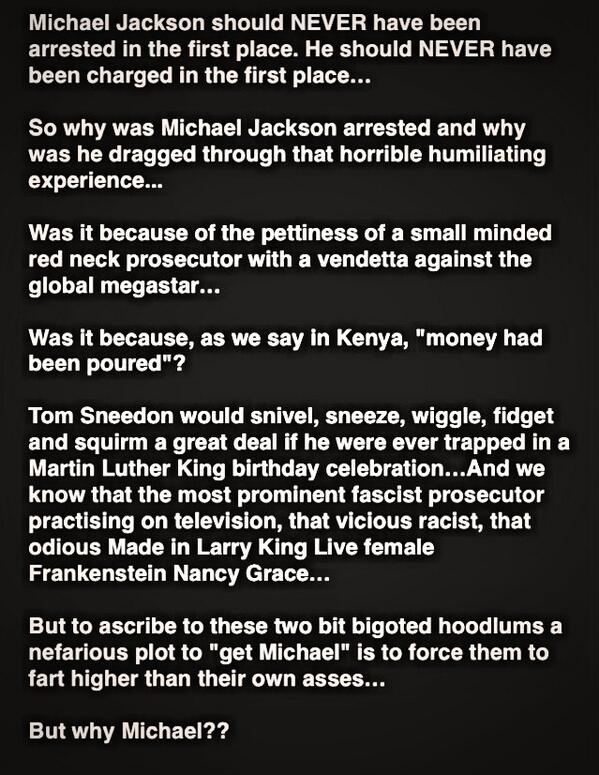
Kenya
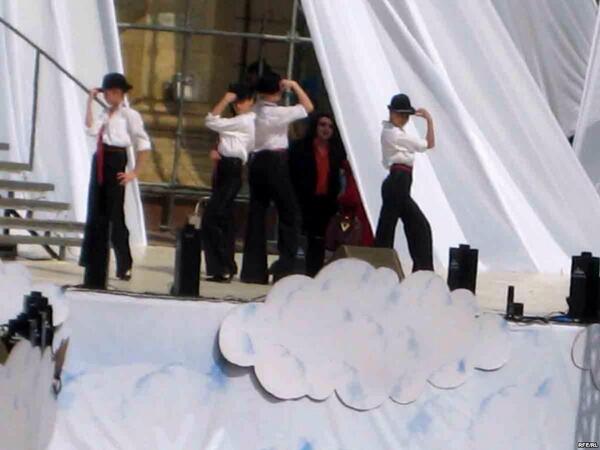
Kazakhstan
| |
| - E-mail - orgNote - Report post to moderator |
India
Haiti.
Ghana
Gambia
France
Ethiopia.
Egypt
Comoros
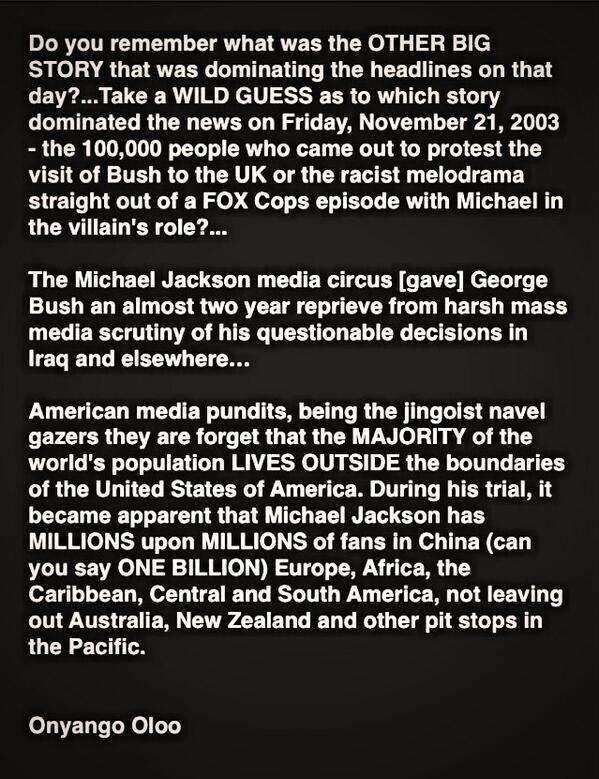
China
| |
| - E-mail - orgNote - Report post to moderator |
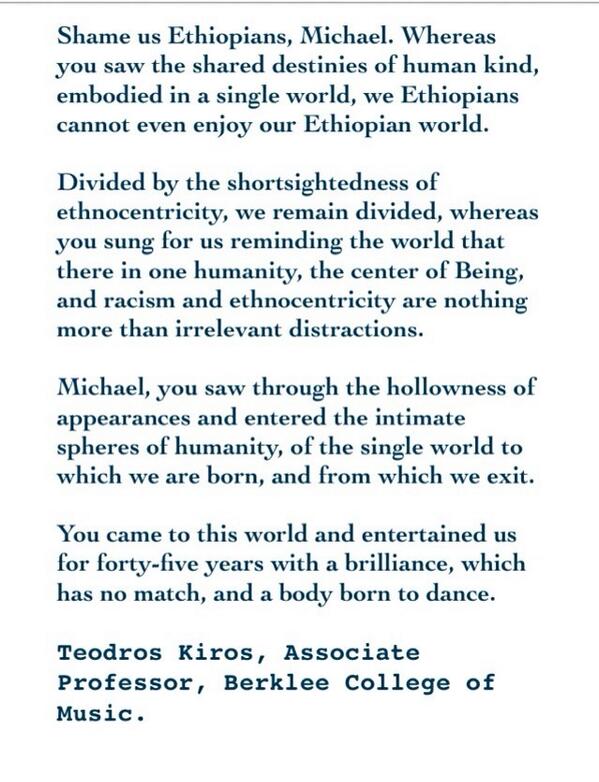
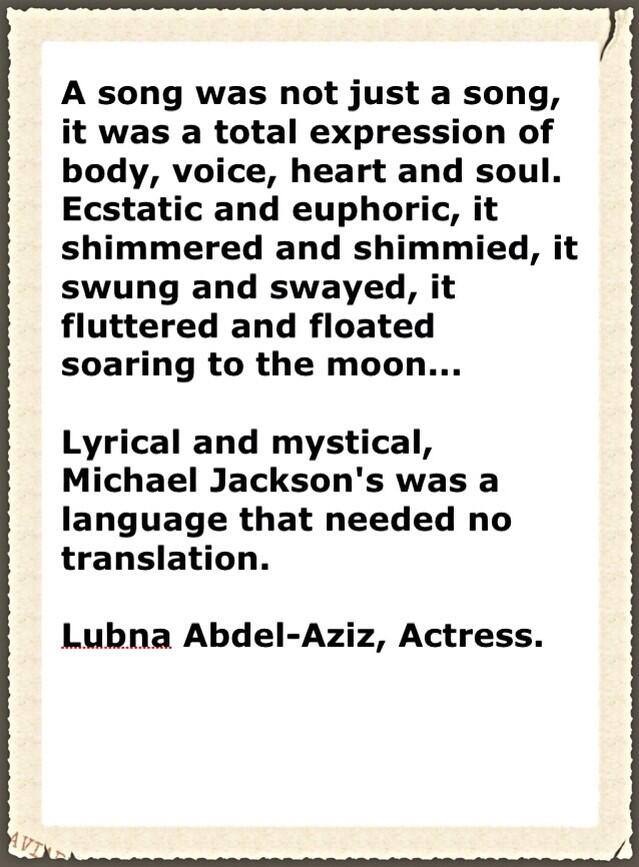
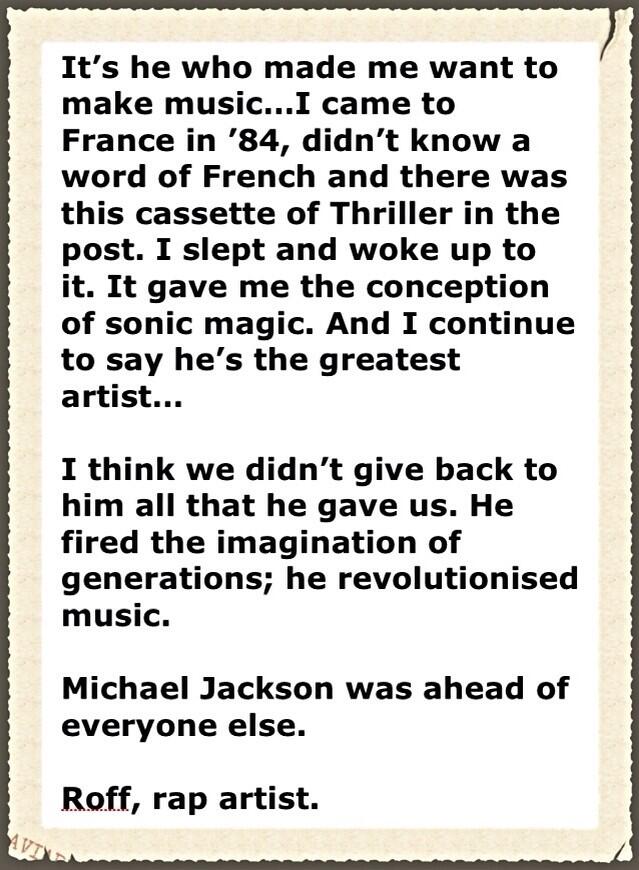
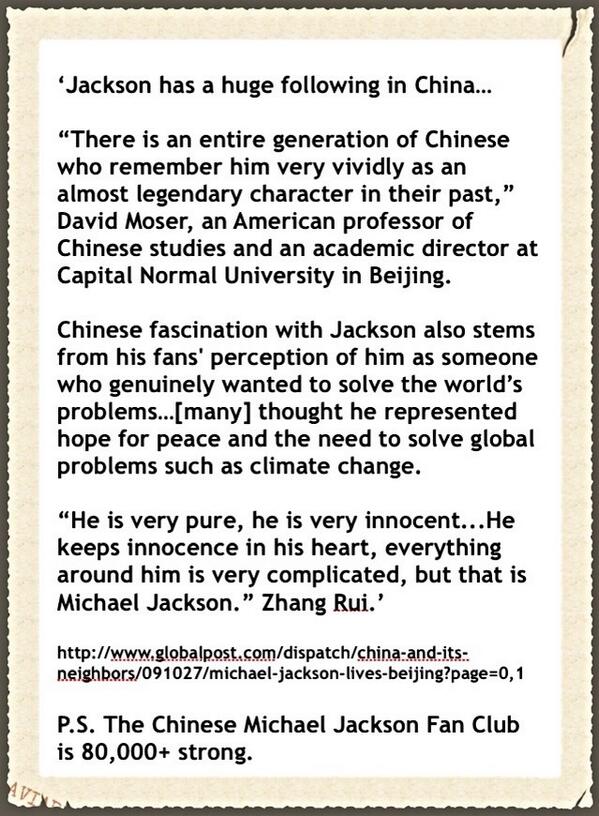

Canada
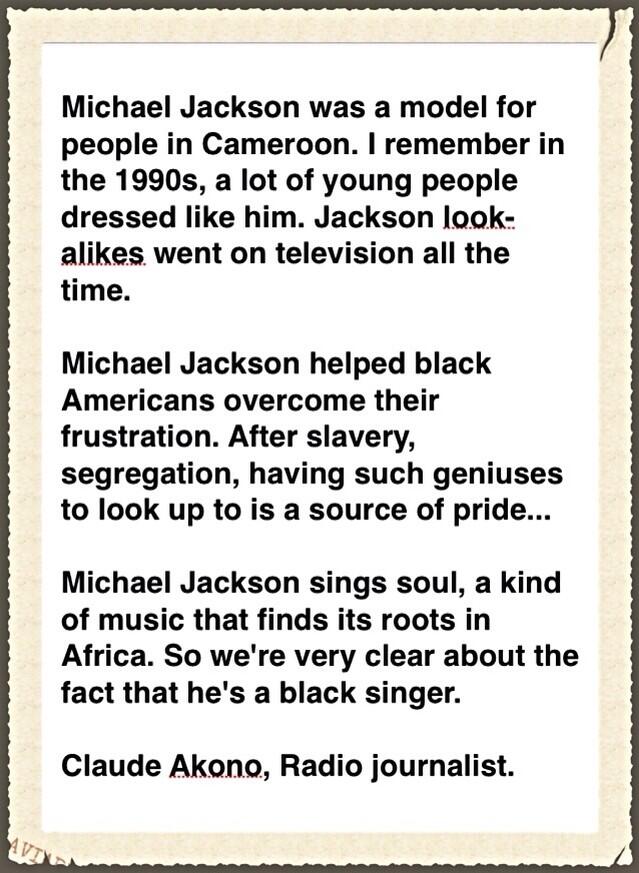
Cameroon
| |
| - E-mail - orgNote - Report post to moderator |

HISTORY…A THEATRICAL MASTERPIECE
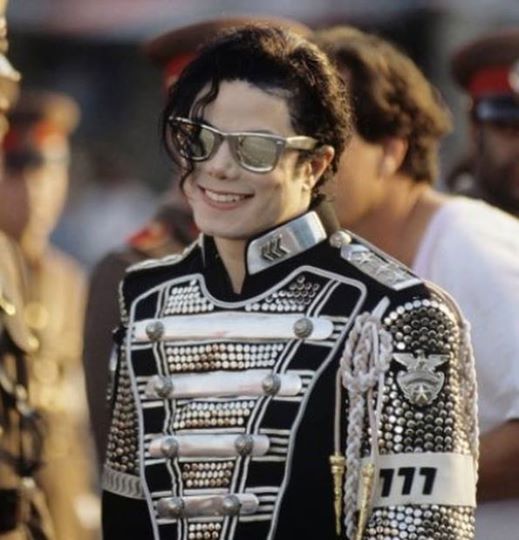
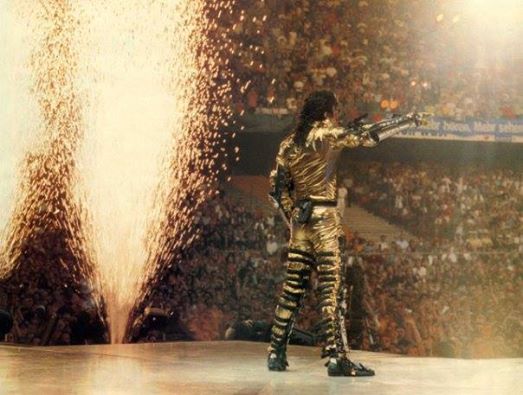
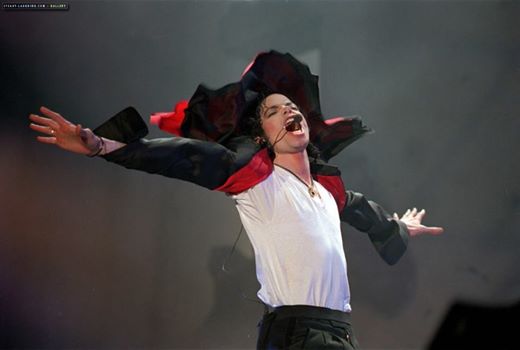
“I’m not planning to write another book anytime soon, If you want to know how I feel, you can check out HIS tory. It’s a musical book.” Michael Jackson “His tory is Michael Jackson’s most personal album. From the impassioned rage of SCREAM to the pained vulnerability of CHILDHOOD, the record was, in Jackson’s words, ‘a musical book.’ It encompassed all the turbulent emotions and struggles of the previous few years. It was his journal, his canvas, his rebuttal.” MAN IN THE MUSIC Joseph Vogel “At our house, we host MICHAEL MARATHONS. Friends come to spend days, evenings and even stay for sleep-overs. Marathons include short films, listening and dancing pleasures and CONCERTS…EVERYTHING MICHAEL. Michael’s HIS tory World Tour is the most requested. Jude Ling There is truth in the capacity for enthusiasm being a sign of a healthy spirit and heart. Michael Jackson’s creative enthusiasm knew no limits, bursting into world attention with
Michael angry “Whatever one makes of the hoopla surrounding the album, one can scarcely ignore its amazing production values and the skill with which truly vast musical resources have been brought to bear upon the project. Where most popular music makes do with the sparse instrumentation of a working band fleshed out with a bit of synth, HIS tory brings together such renowned studio musicians and production talents as Slash, Steve Porcaro, Jimmy Jam, Nile Rodgers, plus a full sixty piece symphony orchestra, several choirs including the Andrae Crouch Singers Choir, star vocalists such as sister Janet Jackson and Boyz II Men, and the arrangements of Quincy Jones and Jeremy Lubbock. Indeed, the sheer richness of the instrumental and vocal scoring is probably And then, we come to the stage production of the History World Tour, with its 82 shows performed for 4,145,000 Fans, in 58 cities, 35 countries, on five continents, a duration of 404 days…the tour reaching 1,000,000 more fans than Michael’s Dangerous World “Michael was at another level, and it was a hell of a level to go to.” R. Kelly “THE TOUR DELIVERED THE FOLLOWING STATEMENT: I AM STILL HERE! I AM BIGGER! I AM STRONGER! I AM THE BEST AT WHAT I DO!” Iconic Magazine “EVERYDAY CREATE YOUR HISTORY! EVERY PATH YOU TAKE YOU’RE LEAVING YOUR LEGACY! http://michaeljacksonchosenvoices.com/history-a-theatrical-masterpiece/ | |
| - E-mail - orgNote - Report post to moderator |

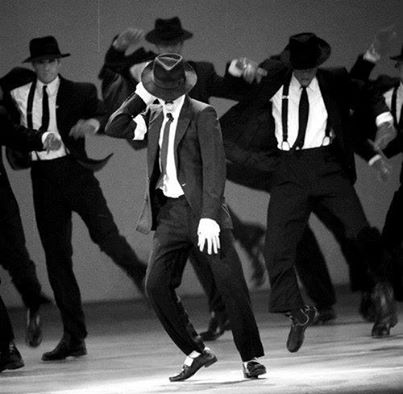
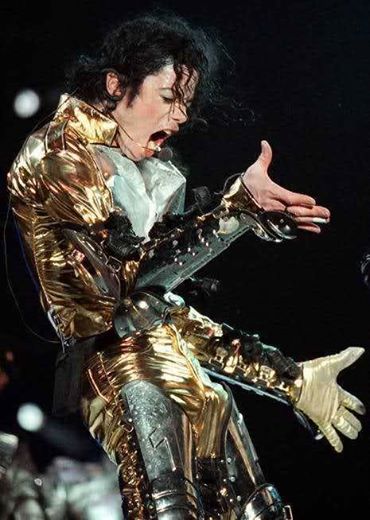


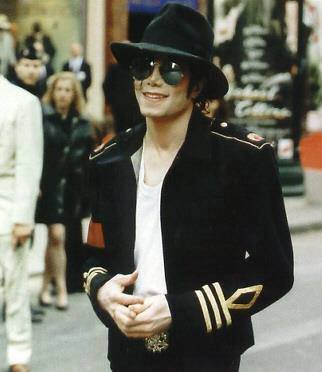


the question is
is POP a identifiable genre of music, does it have an origin, was it born out of a cultural form of expression
or is POP a distinction | |
| - E-mail - orgNote - Report post to moderator |

Can anyone tell me what song is this please? https://vine.co/v/OhD3Oq0E2ME I'll show my... if you show me your... | |
| - E-mail - orgNote - Report post to moderator |

Someone Put Your Hand Out, released as a Dangerous Tour Promo track. | |
| - E-mail - orgNote - Report post to moderator |

xlad said: Someone Put Your Hand Out, released as a Dangerous Tour Promo track. Thanks I'll show my... if you show me your... | |
| - E-mail - orgNote - Report post to moderator |
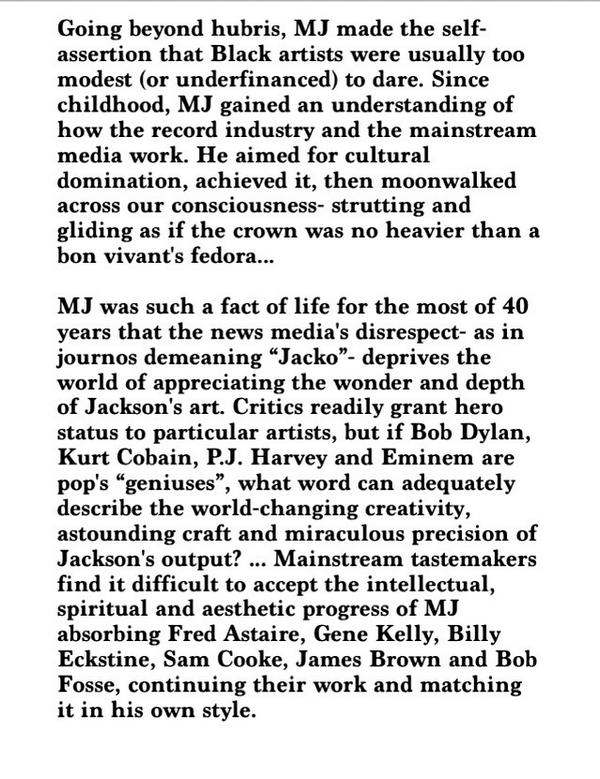
Gene Kelly's Wife reveals his thoughts on Michael Jackson
Stealing from the Best
Posted: 11/17/2014 3:29 pm EST Updated: 11/17/2014 3:59 pm EST 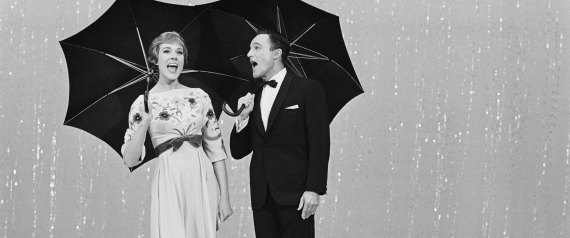 The outpouring of responses I received for my piece about Gene and the upcoming stage production of An American in Paris prompted me to think about creativity and influences and the question -- from whence comes art? Early in our conversations, Gene answered the question for me. "I believe that everyone has been influenced by people before him -- or events or happenings," he said. "The best just don't simply spring full-blown from the earth. They're picking up a seed that has been planted before." For Gene, the seeds were many. "I stole from everybody," he said. Sometimes the borrowing was very conscious, as it was when he and his younger brother Fred went to Loew's Penn Theater in downtown Pittsburgh and picked up the steps of the great Bill Robinson. In Gene's mind, Robinson was "the epitome and the quintessence of tap dancing perfection." As he said, "There were guys that did more exciting stuff, like Buck and Bubbles, in rhythm styles. But Bill Robinson was it. I was very fortunate to be a young man coming along learning dancing when he was around." When I asked what was distinct about Robinson's style, Gene explained, "Nobody could get the ease and the grace and the sound that Bill Robinson got. I've never heard it quite that clean and clear again." When I asked if he could he identify something in his films directly connected with Robinson, he said, "Sure, there are variations of Bill Robinson in the dance I do with Donald O'Connor in Singin' in the Rain -- 'Moses Supposes.' Variations of it, but, basically, some of those steps are from Bill Robinson." According to Gene, "Bill himself had lifted from older minstrel men and vaudeville people before him; things such as asides to the audience or making jokes during the dance." And then there was Robinson's famous canting of his hat that would become one of Gene's signature gestures. "He always wore a derby and he would take that off and fan himself or twist it. And when he'd make an exit, sometimes he would cock it over his eyes. We all stole that from Bill Robinson, and, Lord knows, he might have stolen it from an older minstrel man before my day, before I was even born." The influences spread through all forms of dance. "I soaked up everything that everybody had to teach," he said, "I went to every dance performance that played in Pittsburgh, New York, Chicago, wherever I was. I would look at it. I'd imbibe it and it would be part of me." And, earlier, "I stole from Martha Graham and the American Ballet Theatre and all its great dancers. But I didn't think of it as that. I thought it was educating myself and knowing everything about dance I could know. I wanted to have enough dance that I could dance like Peer Gynt or I could dance like an American sailor getting off a ship." It didn't stop there. Gene also turned to painting, sculpture, athletics, musicals, movies, books. "The more a dancer learns," he insisted, "the better he will be." When I mentioned Gene's voracious appetite to dance historian Elizabeth Kaye, she said it reminded her of her friend Rudolf Nureyev. "He was like a huge Hoover, scooping up everything." When she asked him about his consumption, he replied with an impish grin, "I only steal from the best." Though Gene appreciated when people paid tribute to his work, he never relished literal renderings. He preferred, instead, to see artists take his steps and ideas and turn them into something new. Referring to the role of the artist, he said, "If he just follows the leader and accepts what's been done before, naturally, that can be brought to a very high skill. But if he wants to change it in some way and do it differently, then it jumps up to the major league." To Gene, Michael Jackson was one who made this leap. His movements were derivative, yet he transformed the many borrowings into a new and exciting art form. Like Gene, Michael had an uncanny ability to imitate things precisely. One night when Michael invited us to his house for dinner to discuss the possibility of him starring in a musical version of Frankie and Johnny, he stood in the living room and performed an exact rendition of Gene's "Ballin' the Jack" -- not the vaudeville-style number with Judy Garland in For Me and My Gal but the sexy, earthy version from Gene's hard-to-find 1959 Pontiac television special. He had it down to the minutest detail, including the Bill Robinson-inspired cocked hat. Later, when we were seated at the dining table, he launched into a near-perfect copy of "Makin' Whoopee," saying he loved Gene's harmonizing with Donald O'Connor on the old Eddie Cantor song. I was struck by how much Gene and Michael were alike. Both were sponges, taking what they needed, modifying it, and setting aside the rest. By watching everything Gene did and mimicking his moves, Michael absorbed a whole history of dance -- a range of influences from the simple, clog-shoe-steps of Bill Robinson, to the masculine ballet of Russian Adolph Bolm and the modern ingenuity of Martha Graham -- and so much more. Gene appreciated that Michael had "respect for the older generation," and that he made "no secret" of those who had helped to shape his style. For Gene, dance was a matter of influences and all dancers "have generations behind them." As he had advised his friend Fred Astaire years before when someone had stolen one of Fred's routines: "You mustn't get angry at this. You should be flattered that the guy stole your number. That's the sincerest form of flattery. That's happening to me, and I'm not going to resent it. I'm going to be proud of it." Stealing from the best, indeed. http://www.huffingtonpost..._hp_ref=tw
| |
| - E-mail - orgNote - Report post to moderator |
"Music gives a soul to the universe, wings to the mind, flight to the imagination and life to everything." --Plato
https://youtu.be/CVwv9LZMah0 | |
| - E-mail - orgNote - Report post to moderator |

 Wow, they just showed Michael on Motown 25 on PBS and his performance of Billy Jean was just as electrifying as I remember it being all those decades ago when I first saw it--the night before he became a superstar. I haven't seen it since then. Really takes me back...and Marvin, too.
But they cut some of the scenes with Diana Ross & Supremes... "Music gives a soul to the universe, wings to the mind, flight to the imagination and life to everything." --Plato
https://youtu.be/CVwv9LZMah0 | |
| - E-mail - orgNote - Report post to moderator |
 Everyone looks so young!
they could have been showing MOTOWN 25 all along annually
everything about it was off the charts.... | |
| - E-mail - orgNote - Report post to moderator |
The Messenger King: Michael Jackson and the politics of #BlackLivesMatter"Where are all the celebrities?" That's a question many supporters of #BlackLivesMatter protests are asking. At this moment of great unrest, some are feeling a lack of leadership from those who have worldwide media platforms. Many black actors and musicians have made public statements to express their sorrow and frustration over the Michael Brown and Eric Garner grand jury decisions. John Legend hired food trucks to feed protesters in New York. Hip-hop celebrity J. Cole joined the marchers. Philadelphia rapper Chill Moody wrote a song, "We're Worth More." But there's a feeling that the super-famous haven't really stepped up to the plate. Pharrell's statement was less than satisfactory to some. Where is Oprah? Where is Tyler Perry? Where is Beyonce? These are the questions I've seen on my Twitter timeline these last few weeks. I think something other than apathy is really at work here: fear and trepidation. Artists fear that taking a political stand may jeopardize their reputations and careers. Any political statement is going to have a backlash — and a price will be paid. Careers are dependent on the goodwill of corporations, from the record companies to the sponsors to the radio stations.
Questlove put it like this on his Instagram: "I urge and challenge musicians and artists alike to push themselves to be a voice of the times that we live in. I know that many see what happened to Dixie Chicks' #NatalieMaines @mainesmusic (she bravely expressed her opinion/dismay on the Bush administration declaring war & was unjustly targeted....while in hindsight being CORRECT) suddenly there was an onslaught of radio silence from artists across the board…" . The Dixie Chicks lost their corporate sponsor following that 2003 incident and saw their songs pulled off the air and sales of their music nosedive. Imagine then, what fate could befall artists who made political statements a centerpiece of their work? . Michael Jackson was never afraid to put himself out there for the truth as he saw it. We could always count on Jackson to be the global leader of the band, to give voice to everything we were feeling. His adult catalog is a trove of social activism. Starvation. AIDS. War. Gang violence. Race relations. The environment. It was Jackson who put on concerts for war-torn Sarajevo. It was Jackson who put together a group charity song and concert after 9/11. It was Jackson who used every ounce of his global celebrity to make a difference. He was there. . What happened to Jackson for his politics was so much worse than losing sales. For in speaking truth to power, Jackson made himself a target, and he took a pounding. The worst shots at him were taken by a white district attorney in California who pursued him relentlessly for 12 years and charged him with heinous crimes that were utterly disproved at trial. No one ever seems to connect the dots: A very vocal, very influential, very wealthy black man was taken down by a white prosecutor on trumped-up charges. / Indeed, for Jackson the silence was deafening. He lost sponsors and faced financial problems of exactly the type that Questlove refers to. Skepticism about his vitiligo (later verified by autopsy) and accusations of skin-bleaching had already cost him some supporters. His fellow artists bailed, his protests against the machinations of his record label were roundly mocked in the press. "Most of us had turned our backs on him," Madonna said after his death. . In 1996, Jackson enlisted Spike Lee to create the short film for his song, "They Don't Care About Us." You may have never seen it however, because it was banned from American television. And radio stations in the U.S. were reluctant to play the track because Jackson was accused of using "racist" language in it. . The song was, in large part, a response to the failure to convict police officers of the videotaped 1992 Rodney King beating, but also to his own terribly degrading experience of police brutality in 1993. To re-read the criticism of the song today is to shake your head in disbelief at its disingenuousness. It's obvious that for some in power at the time, this was a dangerous song, and the objections merely an attempt to deflect. . What we need, said Questlove the other day, are "songs with spirit in them. Songs with solutions. Songs with questions. Protest songs don't have to be boring or non-danceable….they just have to speak truth." . On Twitter, #TheyDontCareAboutUs is a hashtag. In Ferguson, they blasted the Michael Jackson song through car windows. In New York City and Berkeley last weekend, it was sung and performed by protesters. And In Baltimore, there was a magical moment when the Morgan State University choir answered protests with a rendition of Jackson's "Heal The World." The price has already been paid, but the check was never cashed. Maybe we just need to finally listen to Michael Jackson. . D.B. Anderson is writer and content strategist based in the Washington DC metro area.
"Music gives a soul to the universe, wings to the mind, flight to the imagination and life to everything." --Plato
https://youtu.be/CVwv9LZMah0 | |
| - E-mail - orgNote - Report post to moderator |
I'm loving this incredibly rare and candid footage! Michael Jackson's big Grammy Win behind the scenes
MJ L.O.V.E: https://www.facebook.com/...689&type=2 / YOUTUBE: http://www.youtube.com/us...nderSilent | |
| - E-mail - orgNote - Report post to moderator |

