independent and unofficial
Prince fan community
Welcome! Sign up or enter username and password to remember me
Forum jump
Forums > General Discussion > Scientists Discover Another Earth!
« Previous topic  Next topic »
  New topic   Printable     (Log in to 'subscribe' to this topic)
Author

Tweet     Share

Message
Thread started 02/13/15 2:50pm

Graycap23

avatar

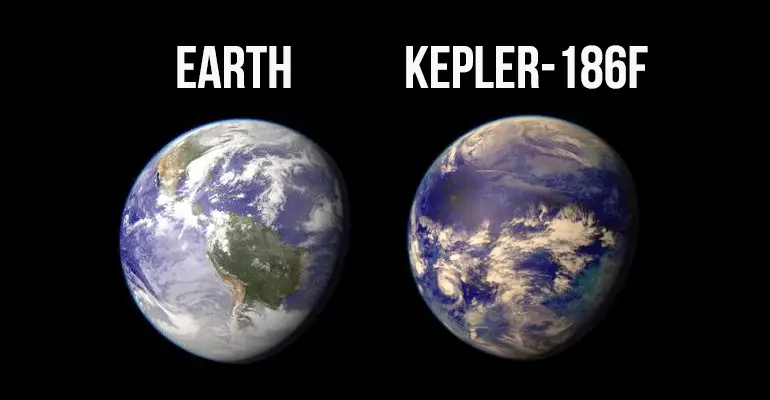
Scientists Discover Another Earth!

Am I the only one excited about this?

Scientists Discover Another Earth!
on 12 February, 2015 at 17:04
http://themindunleashed.org/wp-content/uploads/2015/02/new-earthh.jpg
Advertisements

Gregg Prescott, M.S. In5D.com

NASA’s Kepler Space Telescope recently discovered an Earth-like planet orbiting a nearby star within the habitable zone of our galaxy. Kepler-186f is approximately 500 light-years from Earth in the Cygnus constellation.

The habitable zone, also known as the Goldilocks zone, is the region around a star within which planetary-mass objects with sufficient atmospheric pressure can support liquid water at their surfaces. While it has been estimated that there are at least 40 billion Earth-sized planets orbiting in our Milky Way Galaxy, this particular discovery is labeled the first Earth-sized planet to be found in the habitable zone of another star.

Scientists Discover Another Earth

WHAT DOES THIS MEAN?

http://themindunleashed.org/2015/02/scientists-discover-another-earth.html

FOOLS multiply when WISE Men & Women are silent.
  - E-mail - orgNote - Report post to moderator
Reply #1 posted 02/13/15 2:58pm

JoeTyler

congratulations, but this is like a poor man looking at the rich man's mansion on the hill from afar...

tinkerbell
  - E-mail - orgNote - Report post to moderator
Reply #2 posted 02/13/15 3:02pm

kpowers

avatar

  - E-mail - orgNote - Report post to moderator
Reply #3 posted 02/13/15 6:39pm

purplethunder3
121

avatar

"Music gives a soul to the universe, wings to the mind, flight to the imagination and life to everything." --Plato

https://youtu.be/CVwv9LZMah0
  - E-mail - orgNote - Report post to moderator
Reply #4 posted 02/13/15 8:36pm

Slave2daGroove

Graycap, I don't care what anybody says, I thought this was an interesting story.

Could have come up with a better name though...

  - E-mail - orgNote - Report post to moderator
Reply #5 posted 02/13/15 8:38pm

Graycap23

avatar

Slave2daGroove said:

Graycap, I don't care what anybody says, I thought this was an interesting story.

Could have come up with a better name though...

I wish I had some contacts over at Nasa.

There is no telling what they don't share with the public.

FOOLS multiply when WISE Men & Women are silent.
  - E-mail - orgNote - Report post to moderator
Reply #6 posted 02/13/15 8:57pm

morningsong

These people...Vsauce1 logo 2014.png...took my excited factor down quite a few notches about such things. But it is interesting to me. And they should get the funding they're looking for.

  - E-mail - orgNote - Report post to moderator
Reply #7 posted 02/14/15 1:07am

XxAxX

avatar

wow. very cool. looks pretty, like earth. what do we know of its chemical composition?

  - E-mail - orgNote - Report post to moderator
Reply #8 posted 02/14/15 1:14am

XxAxX

avatar

sorry. i cans answer that one myself:


from: http://www.nasa.gov/ames/...ther-star/


Using NASA's Kepler Space Telescope, astronomers have discovered the first Earth-size planet orbiting a star in the "habitable zone" -- the range of distance from a star where liquid water might pool on the surface of an orbiting planet. The discovery of Kepler-186f confirms that planets the size of Earth exist in the habitable zone of stars other than our sun.

While planets have previously been found in the habitable zone, they are all at least 40 percent larger in size than Earth and understanding their makeup is challenging. Kepler-186f is more reminiscent of Earth."The discovery of Kepler-186f is a significant step toward finding worlds like our planet Earth," said Paul Hertz, NASA's Astrophysics Division director at the agency's headquarters in Washington.

"Future NASA missions, like the Transiting Exoplanet Survey Satellite and the James Webb Space Telescope, will discover the nearest rocky exoplanets and determine their composition and atmospheric conditions, continuing humankind's quest to find truly Earth-like worlds."

Although the size of Kepler-186f is known, its mass and composition are not. Previous research, however, suggests that a planet the size of Kepler-186f is likely to be rocky.

"We know of just one planet where life exists -- Earth. When we search for life outside our solar system we focus on finding planets with characteristics that mimic that of Earth," said Elisa Quintana, research scientist at the SETI Institute at NASA's Ames Research Center in Moffett Field, Calif., and lead author of the paper published today in the journal Science.

"Finding a habitable zone planet comparable to Earth in size is a major step forward."Kepler-186f resides in the Kepler-186 system, about 500 light-years from Earth in the constellation Cygnus. The system is also home to four companion planets, which orbit a star half the size and mass of our sun.

The star is classified as an M dwarf, or red dwarf, a class of stars that makes up 70 percent of the stars in the Milky Way galaxy."M dwarfs are the most numerous stars," said Quintana. "The first signs of other life in the galaxy may well come from planets orbiting an M dwarf."Kepler-186f orbits its star once every 130-days and receives one-third the energy from its star that Earth gets from the sun, placing it nearer the outer edge of the habitable zone.

On the surface of Kepler-186f, the brightness of its star at high noon is only as bright as our sun appears to us about an hour before sunset."Being in the habitable zone does not mean we know this planet is habitable.

The temperature on the planet is strongly dependent on what kind of atmosphere the planet has," said Thomas Barclay, research scientist at the Bay Area Environmental Research Institute at Ames, and co-author of the paper.

"Kepler-186f can be thought of as an Earth-cousin rather than an Earth-twin. It has many properties that resemble Earth."The four companion planets, Kepler-186b, Kepler-186c, Kepler-186d, and Kepler-186e, whiz around their sun every four, seven, 13, and 22 days, respectively, making them too hot for life as we know it. These four inner planets all measure less than 1.5 times the size of Earth.

The next steps in the search for distant life include looking for true Earth-twins -- Earth-size planets orbiting within the habitable zone of a sun-like star -- and measuring the their chemical compositions.

The Kepler Space Telescope, which simultaneously and continuously measured the brightness of more than 150,000 stars, is NASA's first mission capable of detecting Earth-size planets around stars like our sun.Ames is responsible for Kepler's ground system development, mission operations, and science data analysis.

NASA's Jet Propulsion Laboratory in Pasadena, Calif., managed Kepler mission development. Ball Aerospace & Technologies Corp. in Boulder, Colo., developed the Kepler flight system and supports mission operations with the Laboratory for Atmospheric and Space Physics at the University of Colorado in Boulder.

The Space Telescope Science Institute in Baltimore archives, hosts and distributes Kepler science data. Kepler is NASA's 10th Discovery Mission and was funded by the agency's Science Mission Directorate.The SETI Institute is a private, nonprofit organization dedicated to scientific research, education and public outreach. The mission of the SETI Institute is to explore, understand and explain the origin, nature and prevalence of life in the universe.

For more information about the Kepler mission, visit:http://www.nasa.gov/kepler

[Edited 2/13/15 17:15pm]

  - E-mail - orgNote - Report post to moderator
Reply #9 posted 02/14/15 1:16am

XxAxX

avatar

Graycap23 said:

Slave2daGroove said:

Graycap, I don't care what anybody says, I thought this was an interesting story.

Could have come up with a better name though...

I wish I had some contacts over at Nasa.

There is no telling what they don't share with the public.


my cousin works at the nasa jet propulsion lab

  - E-mail - orgNote - Report post to moderator
Reply #10 posted 02/15/15 5:35am

uPtoWnNY

In other science news, it won't be long before we finally see what Pluto looks like. New Horizons will reach the dwarf planet and it's moons by the summer.

  - E-mail - orgNote - Report post to moderator
Reply #11 posted 02/16/15 5:34pm

morningsong

uPtoWnNY said:

In other science news, it won't be long before we finally see what Pluto looks like. New Horizons will reach the dwarf planet and it's moons by the summer.

All the steps making way for "us" to truly discover our own backyard. To think of there being a time when we move around this solar system like we move around this earth. That will be a big something.

  - E-mail - orgNote - Report post to moderator
Reply #12 posted 02/16/15 6:22pm

funkycat00

avatar

lol

  - E-mail - orgNote - Report post to moderator
Reply #13 posted 02/16/15 8:29pm

KoolEaze

avatar

Graycap23 said:

Slave2daGroove said:

Graycap, I don't care what anybody says, I thought this was an interesting story.

Could have come up with a better name though...

I wish I had some contacts over at Nasa.

There is no telling what they don't share with the public.

On the other hand, it is quite interesting what they DO share these days. Like experts warning us not to go overboard with sending messages to aliens because it might be a dangerous thing to do because we don´t know their intentions (in case they actually exist), or NASA not necessarily admitting that there are aliens but at least preparing mankind mentally for a possible first contact with alien lifeforms, and even the Pope saying that we may not be alone in the universe.

Definitely a different message compared to what they used to say not too long ago.

" I´d rather be a stank ass hoe because I´m not stupid. Oh my goodness! I got more drugs! I´m always funny dude...I´m hilarious! Are we gonna smoke?"
  - E-mail - orgNote - Report post to moderator
Reply #14 posted 02/16/15 9:52pm

purplethunder3
121

avatar

When can I move there...

"Music gives a soul to the universe, wings to the mind, flight to the imagination and life to everything." --Plato

https://youtu.be/CVwv9LZMah0
  - E-mail - orgNote - Report post to moderator
Reply #15 posted 02/16/15 11:23pm

babynoz

uPtoWnNY said:

In other science news, it won't be long before we finally see what Pluto looks like. New Horizons will reach the dwarf planet and it's moons by the summer.


Was I the only one who got pissed when they tried to demote Pluto? sad

Prince, in you I found a kindred spirit...Rest In Paradise.
  - E-mail - orgNote - Report post to moderator
Reply #16 posted 02/16/15 11:24pm

babynoz

purplethunder3121 said:

When can I move there...


I was gonna ask if the other earth is as effed up as this one? lol

Prince, in you I found a kindred spirit...Rest In Paradise.
  - E-mail - orgNote - Report post to moderator
Reply #17 posted 02/17/15 1:30am

morningsong

babynoz said:

uPtoWnNY said:

In other science news, it won't be long before we finally see what Pluto looks like. New Horizons will reach the dwarf planet and it's moons by the summer.


Was I the only one who got pissed when they tried to demote Pluto? sad

How in the heck does one initalized deGrasse's name? NdGT looks like a chemistry symbol.


Anyway, you know who to blame.

  - E-mail - orgNote - Report post to moderator
Reply #18 posted 02/17/15 2:31am

paintedlady

avatar

It was only a matter of time before another planet with a similar atmosphere was found, that supports life... thing is why would we want go there? To destroy what we found? Infest them with our sad culture? War mongering? profiteering?

Let's hope we don't repeat our mistakes.

  - E-mail - orgNote - Report post to moderator
Reply #19 posted 02/17/15 2:40am

purplethunder3
121

avatar

We will.

"Music gives a soul to the universe, wings to the mind, flight to the imagination and life to everything." --Plato

https://youtu.be/CVwv9LZMah0
  - E-mail - orgNote - Report post to moderator
Reply #20 posted 02/17/15 4:10am

TD3

avatar

Graycap23 said:

Slave2daGroove said:

Graycap, I don't care what anybody says, I thought this was an interesting story.

Could have come up with a better name though...

I wish I had some contacts over at Nasa.

There is no telling what they don't share with the public.

Ain't that the truth.

  - E-mail - orgNote - Report post to moderator
Reply #21 posted 02/17/15 4:20am

TD3

avatar

babynoz said:

uPtoWnNY said:

In other science news, it won't be long before we finally see what Pluto looks like. New Horizons will reach the dwarf planet and it's moons by the summer.


Was I the only one who got pissed when they tried to demote Pluto? sad

You are not alone, OUTRAGED. lol My mother and I still consider Pluto a planet, dammit.


I hope New Horizons' study of Pluto clears this up for once and for all. Fight for Pluto Planet Status. biggrin

  - E-mail - orgNote - Report post to moderator
Reply #22 posted 02/18/15 1:25am

babynoz

TD3 said:

babynoz said:


Was I the only one who got pissed when they tried to demote Pluto? sad

You are not alone, OUTRAGED. lol My mother and I still consider Pluto a planet, dammit.


I hope New Horizons' study of Pluto clears this up for once and for all. Fight for Pluto Planet Status. biggrin


Yesss! I knew there were some allies in the fight... highfive

Prince, in you I found a kindred spirit...Rest In Paradise.
  - E-mail - orgNote - Report post to moderator
  New topic   Printable     (Log in to 'subscribe' to this topic)
« Previous topic  Next topic »
Forums > General Discussion > Scientists Discover Another Earth!